
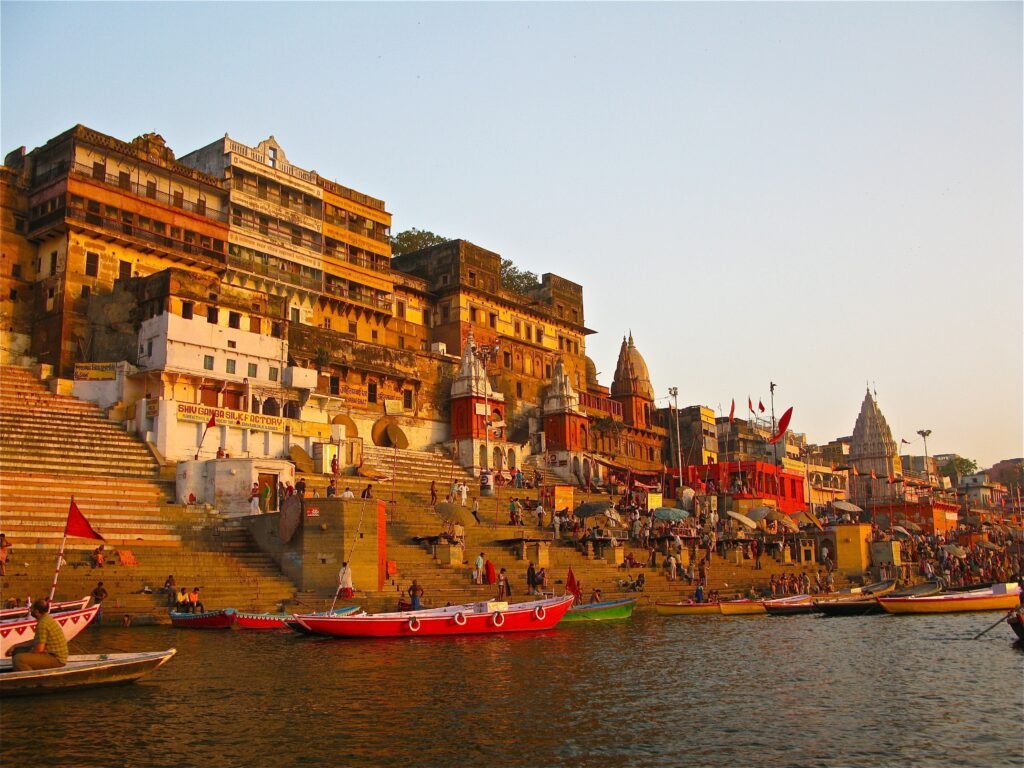
Varanasi, also known as Kashi or Banaras, is a city where spirituality, culture, and everyday life come together along the sacred Ganga. Among its many unforgettable experiences, witnessing the Ganga Aarti at Dashashwamedh Ghat is undoubtedly one of the most memorable.
As the sun sets, the riverfront comes alive with chanting, ringing bells, conch shells, incense, and glowing brass lamps. The ceremony is held every evening, but choosing the right season can make your experience even more special.
If you are planning a Varanasi trip specifically to experience the Ganga Aarti, here is everything you need to know.
What Is the Ganga Aarti in Varanasi?
The Ganga Aarti is an elaborate evening prayer offered to the River Ganga. The most famous ceremony takes place at Dashashwamedh Ghat, where priests perform a synchronized ritual with lamps, incense, conch shells, and devotional chants.
The ceremony generally begins around sunset, so its exact timing changes throughout the year. Recent local guides place the winter ceremony roughly around 6:30–6:45 PM and the summer ceremony around 6:50–7:05 PM, although visitors should confirm the timing on the day of their visit.
The ritual usually lasts around 45 minutes.
Best Time of Year to Visit Varanasi for Ganga Aarti
October to March — The Best Overall Season
For most travellers, October to March is the best time to visit Varanasi for the Ganga Aarti.
The weather is generally much more comfortable than during the hot summer months, making it easier to spend time exploring the ghats, temples, narrow lanes, and markets before heading to the evening ceremony.
Winter also brings a particularly atmospheric quality to the riverfront. The cooler evenings, soft light, and busy ghats create an unforgettable setting for the Aarti.
However, winter is also a popular travel season, so expect larger crowds around Dashashwamedh Ghat.
November — Best for a Festive Experience
November can be an especially exciting month for travellers who want to experience Varanasi at its most vibrant.
The period around Dev Deepawali is spectacular, when thousands of lamps illuminate the ghats and special religious celebrations take place. Dev Deepawali can attract enormous crowds, however, so visitors should plan transportation and viewing arrangements well in advance.
If you want peace and quiet, this may not be the ideal time. If you want atmosphere, lights, photography, and a truly festive Varanasi experience, it can be extraordinary.
April to June — Hot but Still Possible
April through June brings significantly warmer weather to Varanasi. Daytime sightseeing can become tiring, particularly in May and June.
The advantage is that the evening Aarti takes place later because it follows sunset. Recent guides generally place the summer ceremony around 6:45–7:05 PM.
If you visit during these months, plan your sightseeing for the morning and late afternoon and keep the middle of the day relaxed.
July to September — Monsoon Varanasi
The monsoon gives Varanasi a different character. The Ganga can be dramatically high, and weather conditions may affect access to parts of the ghats.
The Aarti continues to be an important evening experience, but visitors should allow extra flexibility because river and weather conditions can change.
For travellers whose priority is comfortable sightseeing, October onward is generally a better choice.
Best Time of Day to Watch the Ganga Aarti
The ideal time is before sunset.
Don’t plan to arrive exactly when the Aarti starts. Dashashwamedh Ghat is one of the busiest places in Varanasi during the ceremony, and arriving early gives you a much better chance of finding a good viewing position.
A practical rule is to reach the area at least 30–60 minutes before the expected start, with additional time during festivals and peak periods. Some recent visitor reports recommend arriving even earlier when seeking prime seating.
Use the extra time to watch the ghats transform from daytime activity into the illuminated evening spectacle.
Where Should You Watch the Ganga Aarti?
Dashashwamedh Ghat
For a first visit, Dashashwamedh Ghat is the classic choice. It offers the grandest and most iconic version of the evening ceremony.
The atmosphere is energetic, crowded, devotional, and visually spectacular.
From a Boat on the Ganga
Watching the Aarti from a boat gives you a completely different perspective.
Instead of looking toward the river from the steps, you can see the illuminated ghat, priests, lamps, and gathering crowds from the water.
For photographers and travellers looking for a panoramic view, this can be an excellent option. Boat viewing is also useful when the steps are extremely crowded.
Assi Ghat
Assi Ghat is another important place to experience Varanasi’s spiritual atmosphere. It is particularly known for Subah-e-Banaras, the peaceful morning cultural and spiritual programme.
If your itinerary allows, combine an evening Ganga Aarti experience with an early-morning visit to Assi Ghat for two very different sides of Varanasi.
Tips for a Memorable Ganga Aarti Experience
Arrive early: Crowds can build quickly, particularly during weekends, holidays and festivals.
Check the timing locally: The Aarti follows sunset, so the start time changes through the year. Special religious occasions can also alter normal arrangements.
Consider a boat: A river-level view provides a memorable perspective and excellent views of the illuminated ghats.
Wear comfortable footwear: You may need to walk through busy lanes and uneven areas around the ghats.
Respect the ceremony: The Ganga Aarti is a religious ritual, not simply a tourist performance. Dress respectfully and follow instructions from local authorities and organisers.
Keep your belongings secure: The ghats can become extremely crowded, so carry only what you need.
Allow extra travel time: Traffic restrictions and pedestrian crowds can make reaching the ghats slower than expected, especially during major festivals.
Is Ganga Aarti Worth Visiting?
Absolutely.
The Ganga Aarti is one of those experiences that is difficult to fully understand through photographs or videos. The sound of the chants, the movement of the lamps, the smell of incense, and the sight of hundreds of people gathered beside the river create an atmosphere that is uniquely Varanasi.
Whether you are visiting for spiritual reasons, cultural exploration, photography, or simply curiosity, the experience can become one of the highlights of your India journey.
Plan Your Varanasi Trip with Bioscope India Tours
The best time to visit Varanasi for the Ganga Aarti is generally October to March, when the weather is more comfortable and the city is at its most inviting for sightseeing. For a particularly spectacular festive experience, consider planning around Dev Deepawali—but be prepared for very large crowds.
Most importantly, don’t rush your Ganga Aarti experience. Arrive early, explore the surrounding ghats, watch the city prepare for sunset, and give yourself time to absorb the atmosphere.
Varanasi isn’t just a destination you visit—it is an experience you feel.
Plan your Varanasi journey with Bioscope India Tours and discover the ghats, temples, culture, heritage, and spiritual traditions of Kashi beyond the usual tourist itinerary.
Note: Ganga Aarti timings can change with sunset, festivals, weather, security arrangements, and local religious events. Confirm the day’s timing locally before travelling to the ghat.